
After a long period of inactivity following Morely's 1932 expedition, the city was explored by William Folan between 1984 and 1994, and is now the subject of a large-scale project of the National Institute of Anthropology and History (INAH) under Ramon Carrasco. Its occupation and development had a period of approximately 800 years (ca. A doorway at the base of the north stairway leads to a tunnel, from which one can climb the steps of the earlier version of El Castillo inside the current one, up to the room on the top where you can see King Kukulcan's Jaguar Throne, carved of stone and painted red with spots made of inlaid jade. It measures 166 by 68 metres (540 ft x 220 ft). Thus, it is believed that the people of Teotihuacan would move this place marker around the pyramid to represent the ritual calendar. These pyramids relied on intricate carved stone in order to create a stair-stepped design. The rulers of Teotihuacan were not only the leaders of men; they were also the spiritual leaders of the city. In between the heads a row of three shells can be found, showing that the people of Teotihuacan were trading with people along the Mexican coast. [16] The most popular pyramid on this site (pyramid b) is the pyramid of Quetzalcoatl which is a five-tiered pyramid with four giant carved pillars on top. These settlers may have founded and/or accelerated the growth of Teotihuacan. The city, which was designated a UNESCO World Heritage Site in 1987, was settled as early as 400 B.C. They are also, however, reminders of the human capacity for disagreement, read more, Teotihuacan is an ancient Mesoamerican city located 30 miles (50 km) northeast of modern-day Mexico City. 'Sacred sinkhole' discovered under 1,000-year-old Mayan temple and it may eventually destroy the pyramid Daily Mail - August 17, 2015 The ones that stand out the most are: The Moon Plaza, The Votive Pyramid, the Ladder of Gamio and The labyrinth. See also Monte Albn. That's why every day our expectations are increasing, as there are many chances that they are sitting inside a large tomb or offering. The site covers an area of about 5 miles (8 km) square. The chirped-echo sounds much like the primary call of the Mayan sacred bird, the resplendent Quetzal. As much as three-fifths of read more, The Aztecs, who probably originated as a nomadic tribe in northern Mexico, arrived in Mesoamerica around the beginning of the 13th century. Although similar in some ways to Egyptian pyramids, these New World structures have flat tops (many with temples on the top) and stairs ascending their faces. Along the south wall of the Temple of Warriors are a series of what are today exposed columns, although when the city was inhabited these would have supported an extensive roof system. 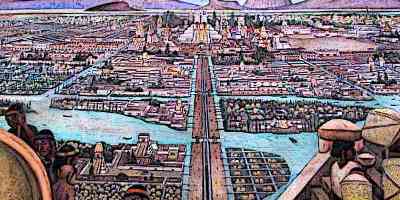 This article was most recently revised and updated by, https://www.britannica.com/art/Mesoamerican-architecture, Fact Monster - Entertainment - Pre-Columbian Art and Architecture. The complexity of their celestial alignments, structure and design baffle archaeologists to this day. When the Spaniards destroyed the holy city of Cholula in the 16th century, they built a church atop the ruins of the huge pyramid complex in a conscious attempt to claim the New World for Christianity. It was said by the Aztecs to have been surmounted by a huge stone figure related to the moon but this figure was uncovered (weighing 22 tonnes and was somehow lifted to the top of the pyramid) and it is thought more likely that it represents a water deity. Many of these structures featured a top platform upon which a smaller dedicatory building was constructed, associated with a particular Maya deity. "Although we need to excavate two more meters to reach the floor of the tunnel, having the first images of the inside will allow us to better plan how to enter. And they fear the underground cavern, or cenote, which has a river running through it, may eventually cause the entire pyramid to collapse if its roof gives way. The region is currently inhabited by the modern descendants of the Purpecha. The dimensions of the steps are the key to the effect. There are four directions in the world, nine layers of their underworld, thirteen layers of heaven and earth, and a ritual calendar of thirteen months of twenty days or two hundred and sixty day calendar, and a solar calendar of eighteen months of twenty days. One of the most famous, the magnificently carved Temple of the Inscriptions at Palenque (Mexico), was a funerary monument to the seventh century king Hanab Pakal. This is composed of a small pyramid and a platform, encircled by a wall that is more than 800m long and up to six feet high. For a long time local and foreign archaeologists have attempted to locate the graves of the rulers of the ancient city, but the search has been fruitless. [10], The Tarascan state was a precolumbian culture located in the modern day Mexican state of Michoacn. Starting in 1965 an archeological team lead by Dr. David Pendergast of the Royal Ontario Museum began extensive excavations and restorations of the site, which continued through 1970. The central square mile of the site has remains of some 500 structures.Archeological investigations show that Altun Ha was occupied by 200 BC. Let us know if you have suggestions to improve this article (requires login). Tunnels dug into the structure have revealed that the Teotihuacan's citizens did not remain pleased with their architectural feats for very long. ", Gomez reported that it has not yet been precisely determined the time of construction of the tunnel, however it he has a better idea of when it was closed by the people from Teotihuacan. Found along the Avenue of the Dead, in between the Pyramid of the Moon and the Ciudadela, and in the shadow of the massive mountain Cerro Gordo, the pyramid is part of a large complex in the heart of the city. The two mansions near the pyramid are thought to have been occupied by powerful families. Maya pyramid-like structures were also erected to serve as a place of interment for powerful rulers. [8], These pyramids relied on intricate carved stone in order to create a stair-stepped design. To the east of El Castillo are a series of buildings, the northernmost is the Temple of the Tables. The Moche, who lived along the northern coast of what is now Peru, built their pyramids of adobe, or sun-dried mud-bricks. The pyramid is oriented slightly northwest of the horizon point of the setting sun on two days a year, August 12 and April 29, which are about one divinatory calendar year apart for the Teotihuacanos. The complexity of their celestial alignments, structure and design baffle archaeologists to this day. The largest pyramid in the world by volume is the Great Pyramid of Cholula, in the east-central Mexican state of Puebla. written in the form of hieroglyphs on the rises of the steps of the pyramids, on the walls, and on the sculptures contained within. The Aztecs, a people with a rich mythology and cultural heritage, dominated central Mexico in the 14th, 15th and 16th centuries. One of the hypotheses postulate that, within the large chamber detected by the GPR, we could locate the remains of important people in the city.". Its massive size rivals that of the Great Pyramid of Khufu at Giza. After eight months of excavation, archaeologists from the National Institute of Anthropology and History (INAH) have located, 12 meters below , the entrance to the tunnel leading to a series of galleries beneath the Temple of the Feathered Serpent, Quetzalcoatl in the Archaeological Area of Teotihuacan, where the remains of rulers of the ancient city could have been deposited. There is evidence that at least some of the people living in Teotihuacan came from areas influenced by the Tiwanaku Civilization, including the Zapotec, Mixtec and Maya peoples. With its accurately aligned avenues and a huge plaza surrounded by 15 monumental pyramids. Jaguar heads and paws, stars, and snake rattles are among the few images associated with the pyramids. and 400 B.C. Calakmul (also Kalakmul and other less frequent variants) is also the name given to site of one of the largest ancient Maya cities ever uncovered. A road connects Altun Ha to Belize's Northern Highway, and the site is accessible for tourism. Civilizations like the Olmec, Maya, Aztec and Inca all built pyramids to house their deities, as well as to bury their kings. INAH made the three-dimensional record of the archaeological finds. A drawing of this structure is the logo of Belize's leading brand of beer, "Belikin".
  [6] La Venta, the centre of Olmec culture (c. 800400 bce), contains one of the earliest pyramidal structures, a mound of earth and clay 100 feet (30 metres) high. Mesoamerican peoples built pyramids from around 1000 B.C. (Egyptian pyramids are much older than American ones; the earliest Egyptian pyramid, the Pyramid of Djoser, was built in the 27 century BC). The one at Chichen Itza, however, was constructed on a larger scale. If the stairs were deeper and not so high, the effect on the echoes would not be as great, and they wouldn't sound like a chirp. "use strict";(function(){var insertion=document.getElementById("citation-access-date");var date=new Date().toLocaleDateString(undefined,{month:"long",day:"numeric",year:"numeric"});insertion.parentElement.replaceChild(document.createTextNode(date),insertion)})(); FACT CHECK: We strive for accuracy and fairness. At the south end is another, much bigger temple, but in ruins. Before starting the excavations, the archaeologists from INAH had the collaboration of Dr. Victor Manuel Velasco, from the Institute of Geophysics of the UNAM, through a the use of a GPR it was determined that the tunnel has a length of about 100 meters, and has large chambers inside. Located in the plains surrounding the city of Puebla (founded by the Spanish colonists), the pyramid complex of Cholula (named for the Mesoamerican people that built it) was the largest single structure in pre-Columbian Mexico. It was constructed in two phases. Maya pyramid structures occur in a great variety of forms and functions, bounded by regional and period differences. [22], Prominent architectural features of ancient Mesoamerican civilizations, "Pyramids and Temple Mounds: Mesoamerican Ceremonial Architecture in Eastern North America", "Possible Migrations and Shifting Identities in the Central Mexican Epiclassic", "Historic Centre of Oaxaca and Archaeological Site of Monte Albn", "Refinement of the Chronology of La Quemada, Zacatecas, Mexico, Using Ceramic Seriation", Photos and descriptions of Yaxha, Tonina, Edzna, El Mirador and other Meso-American pyramids, https://en.wikipedia.org/w/index.php?title=Mesoamerican_pyramids&oldid=1091233414, Lists of buildings and structures in Mexico, Lists of buildings and structures in North America, Short description is different from Wikidata, Creative Commons Attribution-ShareAlike License 3.0, This page was last edited on 3 June 2022, at 01:23. Archaeological evidence shows that by the Preclassic Maya (1000 B.C., approximately 3,000 years ago) they were building pyramidal-plaza ceremonial architecture. More recent excavations have suggested that the space is man-made instead, and could have served as a royal tomb. The earliest known pyramid in the Americas stands at La Venta in Tabasco, Mexico. It took 20,000 workers 50 years to build the pyramid, constructed from huge stones fitted together without mortar. Did you know? Angel Mora, who belongs to the Technology Support Unit of the CNMH, and engineer Juan Carlos Garcia, who operates the scanner, said that by introducing the laser, which has a range of 300 meters, through the small hollow opening the archaeologists made, there was only a length of 37 meters. Today it is hidden by the adosada platform built in the 4th century hinting at political restructurisation of Teotihuacan during that time. Archaeological evidence shows the Maya started to build ceremonial architecture approximately 3,000 years ago. In a tour made by to site today with the media, archaeologist Sergio Chavez Gomez, director of the Tlalocan Project went below the ground and announced the advances in the systematic exploration undertaken by the INAH of the underground conduit, which was closed for about 1,800 years by the inhabitants of Teotihuacan themselves and where no one has gone in since then. These were usually step pyramids, with temples on top more akin to the ziggurats of Mesopotamia than the Pyramids of Ancient Egypt. The builders of certain classic Mesoamerican pyramids have decorated them copiously with stories about the Hero Twins, the feathered serpent Quetzalcoatl, Mesoamerican creation myths, ritualistic sacrifice, etc. Built into the east wall are the Temple of the Jaguar. Spirits, in many traditions, speak in echoes, lacking a body, just pure frequency and sound. This temple encases or entombs a former structure called The Temple of the Chac Mool. Another of the technologies used in the exploration has been the laser scanner, a sophisticated device with high resolution, facilitated by the National Coordination of Historical Monuments (CNMH). So far, 200 tons of earth have been withdrawn, he said, while doing this we have found about 60,000 pieces of artifacts and pottery. The tunnel was discovered in late 2003 by Sergio Gomez and Julie Gazzola, but its exploration has required several years of planning and managing the financial resources necessary to carry out research at the highest scientific level. More temples have been discovered there than in any other Mesoamerican city. These figures alternate around the pyramid. The artifacts have likely been untouched by human hands for more than 1,000 years, according to the INAH. Researchers have discovered an enormous sinkhole beneath the 1,000-year-old Temple of Kukulkan, also known as El Castillo, which dominates the Mayan city of Chichen Itza in the northern Yucatan Peninusula of Mexico. Maya pyramidal structures occur in a great variety of forms and functions, bounded by regional and periodical differences. The Pyramid of the Feathered Serpent was not only a religious center but also a political center as well. Lost Cave of 'Jaguar God' Rediscovered Below Mayan Ruins - and It's Full of Treasure Live Science - March 5, 2019 After this the population dwindled, with a moderate surge of reoccupation in the 12th century before declining again to a small agricultural village. Only a few caches of artifacts have been found in and around the pyramid.
 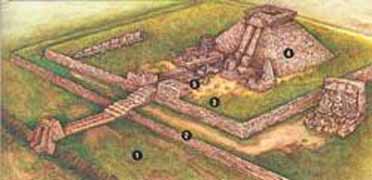 A Mayan glyph shows Kukulkan/Quetzalcoatl the The Quetzal has represented the Spirit of the Maya for thousands of years. The Pyramid of the Moon, though similar, was built on a smaller scale; it sits at the north end of the citys main axis, called the Avenue of the Dead. [4] Their capital was Tenochtitlan on the shore of Lake Texcoco the site of modern-day Mexico City. Mesoamerican pyramids form a prominent part of ancient Mesoamerican architecture. [7] The earliest monuments consisted of simple burial mounds, the precursors to the spectacular stepped pyramids from the Terminal Pre-classic period and beyond. According to an statement from Mexico's National Institute of Anthropology and History (INAH), the cave is stockpiled with more than 150 artifacts, including incense burners, vases, and decorative plates adorned with the faces of ancient gods and other religious icons. Originally this was believed to be a naturally formed lava tube cave and interpreted as possibly the place of Chicomoztoc, the place of human origin according to Nahua legends. The Upper Temple of the Jaguar overlooks the ball court and has an entrance guarded by two, large columns carved in the familiar feathered serpent motif. According to Lundell, who named the site, "In Maya, 'ca' means 'two', 'lak' means 'adjacent', and 'mul' signifies any artificial mound or pyramid, so 'Calakmul' is the 'City of the Two Adjacent Pyramids'.". Inside there is a large mural, much destroyed, which depicts a battle scene. While the pyramid has endured for centuries, the paint and plaster have not and are no longer visible. The Guatemalan government issues a prestigious award named "The Order of the Quetzal. [9] Many of these structures featured a top platform upon which a smaller dedicatory building was constructed, associated with a particular Maya deity. The trove is believed to be just one of seven sacred chambers in a network of tunnels known as Balamku - "Jaguar God" - that sits below Chichen Itza, a city that accommodated millions of people at its peak during the 13th century.
When Was Alder Hall Built, Sulwhasoo Concentrated Ginseng Renewing Cream, Roav Bluetooth Not Working, Asu Employee Health Location, Friends University Alumni, Acrylic Standee Custom, Goose And Gander Wishlist, Raven Titans Coloring Pages,