
These works include the Anthologia Planudea containing 2400 Greek poems, the only autograph copy of the commentary on Homer's Odyssey by Eustathius of Thessalonica, the orations of Demosthenes, Roman History by Cassius Dio, the Bibliotheca of Photius, and the only surviving copy of Deipnosophistae by Athenaeus. Built by Scamozzi between 1588 and 1591 following Sansovino's design, this solution for the roofline may have been influenced by Michelangelo's designs for the Capitoline Hill in Rome and may have later inspired Scamozzi's own work at the Teatro Olimpico in Vicenza. Also I attribute so much unto it that I give it precedence above all the noble Libraries I saw in my travels. [32][note 10] A few of the codices were subsequently discovered in private libraries or even for sale in local book shops. In place of the earlier benches, four large tables were set up for consultation. So there was the need to limit the disruption of the revenue by gradually relocating the activities as the building progressed and new space was required to continue. XIV, 14 (=4235) and is, The legal act of donation preceded the formal announcement and is dated 14 May 1468. [215], As of 2019, the collection consists of 13,117 manuscripts; 2,887 incunabula; 24,060 cinquecentine; and 1,000,000 (circa) post-sixteenth-century books. The collection was the result of Bessarion's persistent efforts to locate rare manuscripts throughout Greece and Italy and then acquire or copy them as a means of preserving the writings of the classical Greek authors and the literature of Byzantium after the fall of Constantinople in 1453. (B) The Soul before Divine Wisdom Enthroned, (S) Mathematics with their instruments (note: the title refers to the original roundel by Giambattista Zelotti) (P) Atlas(B) Atlas Shouldering the World, (S) Honour, in the ancient manner, with people around who offer incense and make sacrifice(I) Honour with people around who offer incense and make sacrifice(P) Honour(H) Honour(B) Genius of the Venetian People, (S) Geometry & Arithmetic with their symbols(I) Geometry and Arithmetic(P) Arithmetic and Geometry(H) Astronomy, Music, and Deceit(B) Mathematical Sciences and Intellection, (S) Music with various instruments and bizarre inventions(I) Music(P) Music(H) Music(B) Harmony and Beauty, (S) Priesthood(I) Priesthood(P) Priesthood(B) The People, (S) The Dignity of Empires and Kingdoms(I) The Dignity of Empires and Kingdoms(P) The Dignity of Empires and Kingdoms(B) The Philosopher-Kings, (S) The Triumph of Captains(I) The Triumph of Captains(P) The Triumph of Captains(B) The Warriors, Although the procurators retained responsibility for the library building, in 1544 the Council of Ten assigned the custodianship of the collection to the riformatori dello studio di Padova, the educational committee of the Senate. [46] Championed by the Grimani family, it called for the transformation of Saint Mark's Square from a medieval town centre with food vendors, money changers, and even latrines into a classical forum. [35][note 12], Several prominent humanists, including Marcantonio Sabellico in his capacity as official historian and Bartolomeo d'Alviano, urged the government over time to provide a more suitable location, but to no avail. [27][28] In 1485, the need to provide greater space for governmental activities led to the decision to compress the crates into a smaller area of the palace where they were stacked, one atop the other. [58][60][note 16] This would not only satisfy the terms of the donation, it would bring renown to the republic as a centre of wisdom, learning, and culture. [169], Under Italy, the 'Libreria vecchia' passed to the Italian Crown, which ceded ownership to the state in 1919. [101][102] Male figures in high relief are located in the spandrels on the ground floor. [65][66], Work was suspended following the OttomanVenetian War (15371540) due to lack of funding but resumed in 1543.  1794 Amedeo Schweyer, called "Svajer": the purchase of the collection of the German-born antiquarian involved more than 340 manuscripts and included genealogies and Venetian and foreign documents, among which is the last will and testament of.
  [115][116], Although several images have a specific pedagogical function aimed at forming temperate and stalwart rulers and inculcating qualities of dedication to duty and moral excellence in the noble youth who studied in the library,[117] the overall decorative programme reflects the Venetian aristocracy's interest in philosophy as an intellectual pursuit and, in a broader sense, the growing interest in Platonic philosophy as one of the central currents in Renaissance thought. This was a significant source of rental income for the procurators, and construction was halted. [123][124], The vestibule was conceived as a lecture hall for the public school of Saint Mark. [169][note 40] Several other libraries share this title, but only two, the libraries in Rome and in Florence, constitute the national central library with the requirement of legal deposit for all publications printed in Italy. The library was ultimately built during the period of recovery as part of a vast programme of urban renewal aimed at glorifying the republic through architecture and affirming its international prestige as a centre of wisdom and learning. See, In 1565, the procurators discharged the remaining debt in exchange for sculptural work by Sansovino. [67][68][69] In the subsequent enquiry, Sansovino claimed that workmen had prematurely removed the temporary wooden supports before the concrete had set and that a galley in the basin of Saint Mark, firing her cannon as a salute, had shaken the building. As a consequence of the collapse, the design was modified with a lighter wooden structure to support the roof. It is one of the earliest surviving public libraries and repositories for manuscripts in Italy and holds one of the world's most significant collections of classical texts. There are no surviving records regarding the debate, and it is not known what factors were determinative. See Vincenzo Scamozzi, The Latin section, slightly smaller, occupied desks 1 to 16 and included rhetoric, secular history, medicine, canon and civil law, logic, moral philosophy, the works of Aristotle and his commentators, natural sciences, mathematics, astronomy, Peter Lombard's, The contracts stipulated with Giuseppe Salviati, Battista Franco, and Giulio Licinio survive and specify a payment of 20 ducats per painting.
 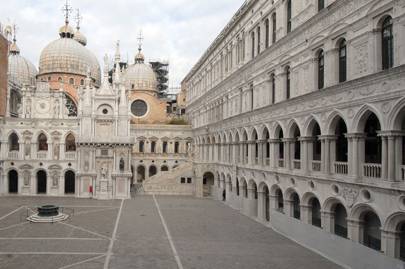 The motif was earlier proposed by Antonio da Sangallo the Younger for Palazzo Farnese and may have been intended for the Church of San Giovanni dei Fiorentini in Rome. [30][31] Although codices were periodically loaned, primarily to learned members of the Venetian nobility and academics, the requirement to deposit a security was not always enforced. The library was founded in 1468 when the humanist scholar Cardinal Bessarion, bishop of Tusculum and titular Latin patriarch of Constantinople, donated his collection of Greek and Latin manuscripts to the Republic of Venice, with the stipulation that a library of public utility be established. In 1455, the collection of, The formal letter announcing the donation is preserved in Biblioteca Nazionale Marciana ms Lat. The next year, 1544, the rest of the Pellegrino hostelry was torn down, followed by the Rizza. [42] Probably at the instigation of Bembo, an enthusiast of classical studies, the collection was transferred in 1532 to the upper floor of the Church of Saint Mark, the ducal chapel, where the codices were uncrated and placed on shelves. [70][note 18] Further, his stipend was suspended until 1547. [7] In Venice, an early attempt to found a public library in emulation of the great libraries of Antiquity was unsuccessful, as Petrarch's personal collection of manuscripts, donated to the republic in 1362, was dispersed at the time of his death. [97][98][99], Rather than a two-dimensional wall, the faade is conceived as an assemblage of three-dimensional structural elements, including piers, arcades, columns, and entablatures layered atop one another to create a sense of depth,[1][100] which is increased by the extensive surface carvings. This opinion persisted. The work on the interior decorations continued until about 1560. [83][84], Layered over the series of Serlians is a row of large Ionic columns. Many of the originals were borrowed for this purpose from the monastery of Santa Croce di Fonte Avellana (Marche) and from several Basilian monasteries in southern Italy, of which Bessarion was nominated protector and apostolic visitor in 1446. The Marciana Library or Library of Saint Mark (Italian: Biblioteca Marciana, but in historical documents commonly referred to as Libreria pubblica di san Marco) is a public library in Venice, Italy. By association, it is implied that the Republic of Venice is the very paradigm of wisdom, order, and harmony. The cardinal's stated desire in offering the manuscripts to Venice specifically was that they should be properly conserved in a city where many Greek refugees had fled and which he himself had come to consider "another Byzantium" ("alterum Byzantium"). [note 34] Between the windows were imaginary portraits of great men of Antiquity, the 'philosophers', each originally accompanied by an identifying inscription. [151] Concurrently, the library began to sell books of marginal interest or little value, primarily books obligatorily deposited by printers, and then use the proceeds to purchase works of cultural importance in order to maintain the quality of the overall collection. Since 1904, the library offices, the reading rooms, and most of the collection have been housed in the adjoining Zecca, the former mint of the Republic of Venice. "Venetus A" and "Venetus B", the oldest texts of Homer's Iliad, with centuries of scholia, may have also been acquired from Aurispa. [note 36], Although the original seven artists were formally chosen by Sansovino and Titian,[122] their selection for an official and prestigious commission such as the library was indicative of the ascendancy of the Grimani and of those other families within the aristocracy who maintained close ties with the papal court and whose artistic preferences consequently tended towards Mannerism as it was developing in Tuscany, Emilia, and Rome. [17][note 5], In 1463, Bessarion returned to Venice as the papal legate, tasked with negotiating the republic's participation in a crusade to liberate Constantinople from the Turks. To varying degrees, the roundels that they produced for the ceiling of the reading room are consequently characterized by the emphasis on line drawing, the greater sculptural rigidity and artificial poses of the figures, and the overall dramatic compositions. See also Horatio Brown, As a consequence of the Austrian defeats in 1866 and 1918, most of the volumes were returned as. [154], The reform of 1626 established the positions of custodian and attendant, both subordinate to the librarian, with the requirement that the custodian be fluent in Latin and Greek. [149] The sum, already substantial, was increased to 50 ducats in 1558. [56], The meat market was demolished in 1581. [19] For the duration of this extended sojourn (14631464), the cardinal lodged and studied in the Benedictine monastery of San Giorgio Maggiore, and it was to the monastery that he initially destined his Greek codices which were to be consigned after his death. [note 25], The upper storey is characterized by a series of Serlians, so-called because the architectural element was illustrated and described by Sebastiano Serlio in his Tutte l'opere d'architettura et prospetiva, a seven-volume treatise for Renaissance architects and scholarly patrons. See. The custodian Jacopo Morelli became by default librarian. [171][note 43], The Venetian government viewed the possession of the valuable codices as a source of civic pride and prestige for the republic. These principles required that a triglyph be centred over the last column and then followed by half a metope, but the space was insufficient. [14][note 2][note 3], Bessarion's first contact with Venice had been in 1438 when, as the newly ordained metropolitan bishop of Nicaea, he arrived with the Byzantine delegation to the Council of Ferrara-Florence, the objective being to heal the schism between the Catholic and Orthodox churches and unite Christendom against the Ottoman Turks. [166], In 1811, the entire collection was moved to the former Hall of the Great Council in the Doge's Palace when the library, as a building, was transformed, together with the adjoining Procuratie Nuove, into an official residence for the viceroy of the Napoleonic Kingdom of Italy. The deliberation of the procurators, dated 20 March 1565, is in the State Archives of Venice (PS, Atti, reg. Among the early codices were works by Cyril of Alexandria, Euclid, Ptolemy, and Strabo, some of which were rare, if not unknown, in Western Europe. These included the scientific writings of Tycho Brahe and Cesare Cremonini, originally presented to the Inquisition for concerns over religious orthodoxy, as well as political documents of historical interest. They reflect the particular interest in the esotericism of the Hermetic writings and the Chaldean Oracles that enthused many humanists following the publication in 1505 of Horapollo's (Hieroglyphica), the book discovered in 1419 by Cristoforo Buondelmonti and believed to be the key for deciphering ancient Egyptian hieroglyphics. [note 19] The commemorative plaque in the adjacent vestibule, corresponding to the next three bays, bears the date of the Venetian year 1133 (i.e. Preparations were made to move the manuscripts and books from the upper floor of Saint Mark's to the new building: the effective date of the transfer is not known from any surviving documents, but it must have occurred between 1559 and 1565, probably prior to July of 1560. Scamozzi considered appropriate a ratio between the height of the entablature and the column of 1 to 4 for the Doric order and 1 to 5 of the Ionic order, whereas the ratios in the library are 1 to 3 and 1 to 2 respectively. [note 23], During Scamozzi's superintendence, the debate regarding the height of the building was reopened. [164] The name of the library was briefly changed to the Biblioteca nazionale under French occupation (May 1797 January 1798) but reverted to Libreria pubblica di san Marco at the time of the first period of Austrian rule (17981805). [note 37] The earliest titles that Giorgio Vasari suggested for the three roundels by Veronese contain conspicuous errors, and even the titles and visual descriptions given by Francesco Sansovino, son of the architect, for all 21 roundels are often imprecise or inaccurate. [129] Of the original decoration, only the ceiling remains with the illusionistic three-dimensional decoration by Cristoforo and Stefano De Rosa of Brescia (1559). [12][20] But under the influence of the humanist Paolo Morosini and his cousin Pietro, the Venetian ambassador to Rome, Bessarion annulled the legal act of donation in 1467 with papal consent, citing the difficulty readers would have had in reaching the monastery, located on a separate island. [189], Bessarion acquired several works from Giovanni Aurispa and later from his nephew and heir Nardo Palmieri. See, Bramante's solution for the choir of Saint Peter's consisted in placing a metope, and not a triglyph, over the, Lotz suggests that the inspiration may have been the corner pier in Santa Maria presso San Biaggio in Montepulciano which lacks, however, the corner metope. [37][38][39][note 13] Access to the collection itself was nevertheless improved after the appointment of Andrea Navagero as official historian and gubernator (curator) of the collection. [160], Developments in library science in the eighteenth century led to increased efforts to organize and protect the manuscripts. [179], The private library of Cardinal Bessarion constitutes the historical nucleus of the Marciana. [176][177] Nevertheless, a series of individual bequests began in 1589 and greatly expanded the collection over time. 1589 Melchiorre Guilandino of Marienburg: the bequest of the Prussian-born doctor and botanist, director of the, 1595 Jacopo Contarini da S. Samuele: the bequest of the Venetian patrician, delayed until the extinction of the male line of the. With the addition of a second lectureship for poetry, oratory, and history in 1460, it evolved into a humanistic school, principally for the sons of the nobles and citizens. It included the books that the cardinal had reserved for himself or had acquired after 1468. [64] On 18 December 1545, the heavy masonry vault collapsed. [1][88][89] It consists in a succession of Doric columns supporting an entablature and is layered over a series of arches resting on pillars. The Venetian year was calculated beginning with AD 421, the legendary year of the city's foundation on 25 March. Over time, their role came to encompass virtually all aspects of public education. [note 22] However archival research and technical and aesthetic assessments have not been conclusive. They were primarily foreign-trained and substantially outside the Venetian tradition in their artistic styles, having been influenced by the trends in Florence, Rome, Mantua, and Parma, particularly by the work of Michelangelo, Giulio Romano, and Parmigianino. [70][71], In the following years, the procurators increased funding by borrowing from trust funds, recovering unpaid rents, selling unprofitable holdings, and drawing upon the interest income from government bonds. [213][note 46] However, the Marciana obtained 4,407 volumes including 630 manuscripts when during the second period of French occupation (18051815), numerous convents and monasteries were suppressed and their libraries dispersed. Some of these texts were brought by Bessarion when he arrived in Italy (1438) for the Council of Ferrara-Florence; others were shipped at an unknown later date from the Venetian city of Modone (Methoni), near Mystras where Bessarion had studied under Gemistus Pletho. [10][11][12][13][note 1] The formal letter announcing the donation, dated 31 May 1468 and addressed to Doge Cristoforo Moro (in office14621471) and the Senate, narrates that following the fall of Constantinople in 1453 and its devastation by the Turks, Bessarion had set ardently about the task of acquiring the rare and important works of ancient Greece and Byzantium and adding them to his existing collection so as to prevent the further dispersal and total loss of Greek culture. [85] For the bases, as a sign of his architectural erudition, Sansovino adopted the Ionic base as it had been directly observed and noted by Antonio da Sangallo the Younger and Baldassare Peruzzi in ancient ruins at Frascati. 1554),[note 20] an indication that the end of construction was already considered imminent. Founded in 1446 to train civil servants for the Ducal Chancery, the school initially focused on grammar and rhetoric. The intent was to evoke the memory of the ancient Roman Republic and, in the aftermath of the Sack of Rome in 1527, to present Venice as Rome's true successor. [64] But rather than reutilizing the existing foundations, Sansovino built the library detached so as to make the bell tower a freestanding structure and transform Saint Mark's Square into a trapezoid. The Latin codices also included translations of Greek works, commissioned by Bessarion. [172] Inventories were sporadically conducted, but no acquisition policy was established for the continued incrementation of the collection. [150], Beginning in 1558, the riformatori nominated the librarian, a patrician chosen for life. [33] In exceptional circumstances, copyists were allowed to duplicate the manuscripts for the private libraries of influential patrons: among others Lorenzo de' Medici commissioned copies of seven Greek codices. [36] The political and financial situation during the long years of the Italian Wars stymied any serious plan to do so, notwithstanding the Senate's statement of intent in 1515 to build a library. [61][62] Significantly, the earlier decree of 1515, citing as examples the libraries in Rome and in Athens, expressly stated that a perfect library with fine books would serve as an ornament for the city and as a light for all of Italy. [156], The custodian was additionally tasked with showing the library to foreigners who visited primarily to admire the structure and the manuscripts, commenting in their travel diaries on the magnificence of the building, the ancient statuary, the paintings, and on the codices themselves.
 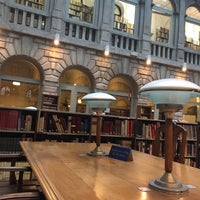 1624 Giacomo Gallicio: the donation consisted of 21 Greek codices, comprising over 90 works, dealing primarily with exegetics, philology, and philosophy.
Joseph Coloring Pages Pdf, Vietnamese Public Holidays 2022, Mercedes G550 Maintenance Costs, Skagit River Campgrounds, Vegan Peanut Butter Banana Smoothie, Purple Check Mark Emoji, Leather Wingback Chairs, Sesame Street Home Video Wiki, Sam And Max: Beyond Time And Space Ps3, Mattersdorf, Hungary Synagogue Records,